<?xml version="1.0" encoding="utf-8"?>
<feed xmlns="http://www.w3.org/2005/Atom">
    <title>David Sylvian 2009</title>
    <link rel="alternate" type="text/html" href="http://www.davidsylvian.com/" />
    <link rel="self" type="application/atom+xml" href="http://www.davidsylvian.com/atom.xml" />
   <id>tag:www.davidsylvian.com,2012://15</id>
    <link rel="service.post" type="application/atom+xml" href="http://www.davidsylvian.com/movabletype/mt-atom.cgi/weblog/blog_id=15" title="David Sylvian 2009" />
    <updated>2012-01-30T16:19:04Z</updated>
    
    <generator uri="http://www.sixapart.com/movabletype/">Movable Type 3.2</generator>
 
<entry>
    <title>A Message From David Regarding The Tour Dates</title>
    <link rel="alternate" type="text/html" href="http://www.davidsylvian.com/news/a_message_from_david_regarding_the_tour_dates.html" />
    <link rel="service.edit" type="application/atom+xml" href="http://www.davidsylvian.com/movabletype/mt-atom.cgi/weblog/blog_id=15/entry_id=1561" title="A Message From David Regarding The Tour Dates" />
    <id>tag:www.davidsylvian.com,2012://15.1561</id>
    
    <published>2012-01-30T16:18:11Z</published>
    <updated>2012-01-30T16:19:04Z</updated>
    
    <summary>This isn&apos;t a message I&apos;d anticipated writing. Unless memory fails me, I&apos;ve managed to get this far in life without having to pull out from touring commitments entirely. I&apos;ve had messages from everyone involved in the tour, all very generous and forgiving, willing me onto better health, which in my book goes to show just what a wonderful team of people we had in place. Oddly no news from the tour manager Danny White. Whilst he&apos;s one of my favorite people to tour with he may now hold a permanent grudge. Too early to tell. My sincere apologies (and gratitude) to all who purchased tickets for the shows. It appears there were more of you out there than I&apos;d anticipated. I&apos;m undergoing tests and treatment and hope, all being well, to be able to announce a rescheduling of the tour within the coming months. If there&apos;s an upside to this situation it&apos;s that, with even more time to prepare, the tour will be all the stronger for it. I do hope to see you out there ASAP. Until then .. love and gratitude david...</summary>
    <author>
        <name>Opium</name>
        
    </author>
            <category term="news" />
    
    <content type="html" xml:lang="en" xml:base="http://www.davidsylvian.com/">
        <![CDATA[<p>This isn't a message I'd anticipated writing. Unless memory fails me, I've <br />
managed to get this far in life without having to pull out from touring <br />
commitments entirely. I've had messages from everyone involved in the tour, all very generous and forgiving, willing me onto better health, which in my book goes to show just what a wonderful team of people we had in place. Oddly no news from the tour manager Danny White. Whilst he's one of my favorite people to tour with he may now hold a permanent grudge. Too early to tell. </p>

<p>My sincere apologies (and gratitude) to all who purchased tickets for the shows. </p>

<p>It appears there were more of you out there than I'd anticipated. I'm undergoing tests and treatment and hope, all being well, to be able to announce a rescheduling of the tour within the coming months. If there's an upside to this situation it's that, with even more time to prepare, the tour will be all the stronger for it. </p>

<p>I do hope to see you out there ASAP. Until then .. love and gratitude</p>

<p>david</p>]]>
        
    </content>
</entry>
<entry>
    <title>David Sylvian Tour Dates in March / April Postponed</title>
    <link rel="alternate" type="text/html" href="http://www.davidsylvian.com/news/david_sylvian_cancels_tour_dates_in_march_april.html" />
    <link rel="service.edit" type="application/atom+xml" href="http://www.davidsylvian.com/movabletype/mt-atom.cgi/weblog/blog_id=15/entry_id=1559" title="David Sylvian Tour Dates in March / April Postponed" />
    <id>tag:www.davidsylvian.com,2012://15.1559</id>
    
    <published>2012-01-30T15:47:11Z</published>
    <updated>2012-01-30T17:42:25Z</updated>
    
    <summary>It is with great sadness that we announce that David Sylvian will be unable to undertake the scheduled tour in March and April 2012. David has sustained a lower back injury that is causing him significant pain and affecting his mobility to such a degree that, at this time, he will be unable to perform. We are hoping that with medical care his condition will improve siginificantly, and that we&apos;ll be able to reschedule the tour at a later date. We&apos;re doing all that we can to bring this unanticipated setback to a positive conclusion. David will be writing a personal note that we will post online shortly. In the meantime, should any of you wish to return your tickets for a refund, please contact the venues / agencies from whom you purchased your tickets. They&apos;re currently being made aware of the situation....</summary>
    <author>
        <name>Opium</name>
        
    </author>
            <category term="news" />
    
    <content type="html" xml:lang="en" xml:base="http://www.davidsylvian.com/">
        <![CDATA[<p>It is with great sadness that we announce that David Sylvian will be unable to undertake the scheduled tour in March and April 2012.</p>

<p>David has sustained a lower back injury that is causing him significant pain and affecting his mobility to such a degree that, at this time, he will be unable to perform.</p>

<p>We are hoping that with medical care his condition will improve siginificantly, and that we'll be able to reschedule the tour at a later date. We're doing all that we can to bring this unanticipated  setback to a positive conclusion.</p>

<p>David will be writing a personal note that we will post online shortly.</p>

<p>In the meantime, should any of you wish to return your tickets for a refund, please contact the venues  / agencies  from whom you purchased your tickets. They're currently being made aware of the situation.</p>]]>
        
    </content>
</entry>
<entry>
    <title>Exclusive Pre-Order Link for David Sylvian&apos;s Paris Concert on 13th April 2012</title>
    <link rel="alternate" type="text/html" href="http://www.davidsylvian.com/news/exclusive_preorder_link_for_david_sylvians_paris_concert_on_13th_april_2012.html" />
    <link rel="service.edit" type="application/atom+xml" href="http://www.davidsylvian.com/movabletype/mt-atom.cgi/weblog/blog_id=15/entry_id=1549" title="Exclusive Pre-Order Link for David Sylvian's Paris Concert on 13th April 2012" />
    <id>tag:www.davidsylvian.com,2012://15.1549</id>
    
    <published>2012-01-13T16:47:42Z</published>
    <updated>2012-01-13T16:52:50Z</updated>
    
    <summary>You can now purchase tickets to see David perform as part of the Banlieues Bleus Festival in Paris on 13th April, using the exclusive pre-order ticket link here For more information about the Festival you can visit here...</summary>
    <author>
        <name>Opium</name>
        
    </author>
            <category term="news" />
    
    <content type="html" xml:lang="en" xml:base="http://www.davidsylvian.com/">
        <![CDATA[<p>You can now purchase tickets to see David perform as part of the Banlieues Bleus Festival in Paris on 13th April, using the exclusive pre-order ticket link <a href="http://www.forumsirius.fr/orion/bbleu.phtml?spec=615&optnav=bb">here</a></p>

<p>For more information about the Festival you can visit <a href="http://www.banlieuesbleues.org/accueil.php">here</a></p>]]>
        
    </content>
</entry>
<entry>
    <title>David Sylvian to perform in Paris in April 2012</title>
    <link rel="alternate" type="text/html" href="http://www.davidsylvian.com/news/david_sylvian_to_perform_in_paris_in_april_2012.html" />
    <link rel="service.edit" type="application/atom+xml" href="http://www.davidsylvian.com/movabletype/mt-atom.cgi/weblog/blog_id=15/entry_id=1547" title="David Sylvian to perform in Paris in April 2012" />
    <id>tag:www.davidsylvian.com,2011://15.1547</id>
    
    <published>2011-12-20T18:02:57Z</published>
    <updated>2011-12-20T18:05:01Z</updated>
    
    <summary>David Sylvian will be playing in Paris on April 13th as part of the Banlieues Bleues Festival. David&apos;s concert will be the closing event of the festival. Tickets wil be on-sale in the middle of January and we will be providing a pre-order ticket link exclusively to David&apos;s fans in advance of the general on-sale. The festival website is here...</summary>
    <author>
        <name>Opium</name>
        
    </author>
            <category term="news" />
    
    <content type="html" xml:lang="en" xml:base="http://www.davidsylvian.com/">
        <![CDATA[<p>David Sylvian will be playing in Paris on April 13th as part of the Banlieues Bleues Festival. David's concert will be the closing event of the festival. Tickets wil be on-sale in the middle of January and we will be providing a pre-order ticket link exclusively to David's fans in advance of the general on-sale.</p>

<p>The festival website is <a href="http://www.banlieuesbleues.org/accueil.php">here</a><br />
</p>]]>
        
    </content>
</entry>
<entry>
    <title>New Interview with David in Deluxx Digital Magazine</title>
    <link rel="alternate" type="text/html" href="http://www.davidsylvian.com/news/interview_with_david_in_deluxx_digital_magazine.html" />
    <link rel="service.edit" type="application/atom+xml" href="http://www.davidsylvian.com/movabletype/mt-atom.cgi/weblog/blog_id=15/entry_id=1545" title="New Interview with David in Deluxx Digital Magazine" />
    <id>tag:www.davidsylvian.com,2011://15.1545</id>
    
    <published>2011-12-15T12:41:25Z</published>
    <updated>2011-12-15T12:47:04Z</updated>
    
    <summary>View the article here in the latest issue...</summary>
    <author>
        <name>Opium</name>
        
    </author>
            <category term="news" />
    
    <content type="html" xml:lang="en" xml:base="http://www.davidsylvian.com/">
        <![CDATA[<p><a href="http://deluxxdigital.com/">View the article here in the latest issue</a></p>]]>
        
    </content>
</entry>
<entry>
    <title>Implausible Beauty tour - a message from David Sylvian</title>
    <link rel="alternate" type="text/html" href="http://www.davidsylvian.com/news/implausible_beauty_tour_a_message_from_david_sylvian.html" />
    <link rel="service.edit" type="application/atom+xml" href="http://www.davidsylvian.com/movabletype/mt-atom.cgi/weblog/blog_id=15/entry_id=1542" title="Implausible Beauty tour - a message from David Sylvian" />
    <id>tag:www.davidsylvian.com,2011://15.1542</id>
    
    <published>2011-12-02T11:06:38Z</published>
    <updated>2011-12-02T11:10:01Z</updated>
    
    <summary>Information on the musicians involved in the Implausible Beauty series of performances alongside a personal message from David can now be read on the tour&apos;s microsite: tour.davidsylvian.com...</summary>
    <author>
        <name>PhilipMarshall</name>
        
    </author>
            <category term="news" />
    
    <content type="html" xml:lang="en" xml:base="http://www.davidsylvian.com/">
        <![CDATA[<p>Information on the musicians involved in the Implausible Beauty series of performances alongside a personal message from David can now be read on the tour's microsite: <a href="http://tour.davidsylvian.com">tour.davidsylvian.com</a> </p>]]>
        
    </content>
</entry>
<entry>
    <title>New German Tour Date Added</title>
    <link rel="alternate" type="text/html" href="http://www.davidsylvian.com/news/new_german_tour_date_added.html" />
    <link rel="service.edit" type="application/atom+xml" href="http://www.davidsylvian.com/movabletype/mt-atom.cgi/weblog/blog_id=15/entry_id=1540" title="New German Tour Date Added" />
    <id>tag:www.davidsylvian.com,2011://15.1540</id>
    
    <published>2011-10-21T10:20:50Z</published>
    <updated>2011-10-21T10:31:17Z</updated>
    
    <summary>We have added another German show to the forthcoming Implausible Beauty 2012 tour. This will be on the 19th March 2012, in a brand new venue in Frankfurt called The Gibson. Tickets can be bought from the link below and are on sale now. Buy tickets here...</summary>
    <author>
        <name>Opium</name>
        
    </author>
            <category term="news" />
    
    <content type="html" xml:lang="en" xml:base="http://www.davidsylvian.com/">
        <![CDATA[<p>We have added another German show to the forthcoming Implausible Beauty 2012 tour.</p>

<p>This will be on the 19th March 2012, in a brand new venue in Frankfurt called The Gibson.</p>

<p>Tickets can be bought from the link below and are on sale now.</p>

<p><a href="http://www.ticketmaster.de/event/David-Sylvian-tickets/GFP1903">Buy tickets here</a></p>]]>
        
    </content>
</entry>
<entry>
    <title>&quot;Inventive and beautifully direct&quot;</title>
    <link rel="alternate" type="text/html" href="http://www.davidsylvian.com/news/inventive_and_beautifully_direct.html" />
    <link rel="service.edit" type="application/atom+xml" href="http://www.davidsylvian.com/movabletype/mt-atom.cgi/weblog/blog_id=15/entry_id=1539" title="&quot;Inventive and beautifully direct&quot;" />
    <id>tag:www.davidsylvian.com,2011://15.1539</id>
    
    <published>2011-10-17T14:36:22Z</published>
    <updated>2011-10-17T14:37:08Z</updated>
    
    <summary>Review of Died In The Wool by Nenad Georgievksi Died In The Wool Review...</summary>
    <author>
        <name>Opium</name>
        
    </author>
            <category term="news" />
    
    <content type="html" xml:lang="en" xml:base="http://www.davidsylvian.com/">
        <![CDATA[<p>Review of Died In The Wool by Nenad Georgievksi</p>

<p><a href="http://www.samadhisound.com/reviews/allaboutjazzcom_additional_died_in_the_wool_review.html">Died In The Wool Review</a><br />
</p>]]>
        
    </content>
</entry>
<entry>
    <title>A Welcoming Silence (or the Eternal Amateur)</title>
    <link rel="alternate" type="text/html" href="http://www.davidsylvian.com/texts/interviews/a_welcoming_silence_or_the_eternal_amateur.html" />
    <link rel="service.edit" type="application/atom+xml" href="http://www.davidsylvian.com/movabletype/mt-atom.cgi/weblog/blog_id=15/entry_id=1534" title="A Welcoming Silence (or the Eternal Amateur)" />
    <id>tag:www.davidsylvian.com,2011://15.1534</id>
    
    <published>2011-09-23T15:05:37Z</published>
    <updated>2011-09-23T16:24:19Z</updated>
    
    <summary>On the subject of Punkt and Died in the Wool Why did you agree to appear at the PUNKT-Festivalen? Jan and Erik have been gracious enough to invite my participation in Punkt on an almost annual basis but this was the first year when the possibility of contributing to the festival in some fashion seemed a reality plus, I like what Jan and Erik have been doing with over the years and wanted to lend some support with my efforts.  What expectations do you have to your stay? I don&apos;t come with expectations, it&apos;s not knowing exactly what to expect that&apos;s exciting to me.  What do you know about the Norwegian music scene? I appear to have a connection with an aspect of it in the form of some of my collaborative partners, a tenuous but respectful exchange with Rune Kristofferson, backed by a general knowledge of the key players past and present.  What is your experience of Jan Bang and Erik Honore as working partners? Generous, gracious, sensitive, and fully engaged. They seem to have an understanding of my aesthetic, and I something of theirs.  In what direction do your interests as a musician lie at the moment? I seem to be open to a variety of possibilities at this moment in time. In the short term I anticipate a return to slightly more formal structures than in the recent past but I intend to pursue multiple directions simultaneously.  How did you manage to get Derek Bailey on board...</summary>
    <author>
        <name>PhilipMarshall</name>
        
    </author>
            <category term="interviews" />
    
    <content type="html" xml:lang="en" xml:base="http://www.davidsylvian.com/">
        <![CDATA[<p><i>On the subject of Punkt and Died in the Wool</i></p>

<p><span class="discogimg"><img src="http://www.davidsylvian.com/images/110923punkt.jpg"  /></span></p>

<p><b>Why did you agree to appear at the <a href="http://punktfestival.no/" target="new">PUNKT-Festivalen</a>?</b></p>

<p>Jan and Erik have been gracious enough to invite my participation in Punkt on an almost annual basis but this was the first year when the possibility of contributing to the festival in some fashion seemed a reality plus, I like what Jan and Erik have been doing with over the years and wanted to lend some support with my efforts. </p>

<p><b>What expectations do you have to your stay?</b></p>

<p>I don't come with expectations, it's not knowing exactly what to expect that's exciting to me. </p>

<p><b>What do you know about the Norwegian music scene?</b></p>

<p>I appear to have a connection with an aspect of it in the form of some of my collaborative partners, a tenuous but respectful exchange with Rune Kristofferson, backed by a general knowledge of the key players past and present. </p>

<p><b>What is your experience of Jan Bang and Erik Honore as working partners?</b></p>

<p>Generous, gracious, sensitive, and fully engaged. They seem to have an understanding of my aesthetic, and I something of theirs. </p>

<p><b>In what direction do your interests as a musician lie at the moment?</b></p>

<p>I seem to be open to a variety of possibilities at this moment in time. In the short term I anticipate a return to slightly more formal structures than in the recent past but I intend to pursue multiple directions simultaneously. </p>

<p><b>How did you manage to get Derek Bailey on board the Blemish project?</b></p>

<p>It wasn't that difficult. I spoke to him for about 15 mins on the phone after which he was onboard. I told him I wanted to be challenged as a vocalist and he said 'that I can do for you'. </p>

<p><b>How did you come up with the idea of singing along to Bailey´s improvisational music? I know you did something similar with Keith Tippett in the 90s.</b></p>

<p>It was a matter of timing, maturity and the right material. When I first heard Derek back in the 80's I thought 'I'd love to work with this guy' but it wasn't until I was contemplating Blemish that this notion became for me a reality. During this gestation period for Blemish, Derek's was the only music I could listen to and so there formed a bond in my mind between his work and the project I was about to embark on. After working on Blemish for a couple of weeks I was certain Derek had to be a part of it hence the call. </p>

<p><b>How did Derek Bailey rate the finished product. He wasn´t in the habit of playing with vocalists.</b></p>

<p>I can't say with any certainty. What someone may tell you in person may not be the most frank opinion although, Derek had no difficulty with being blunt. He told me some months later, at tea at his home in London, that he thought the pieces worked. He felt his role was accompanist to my lead (whether this was a good or a bad thing or just an observation I can't say). It would've been interesting to work with Derek again in a different context but, alas, that wasn't to be. </p>

<p><b>Why did you choose to remix such a perfect album as Blemish?</b></p>

<p>Because the pieces lent themselves to reinterpretation. I also used the remixes as a mean of testing the water for potential future collaborators. </p>

<p><b>In which musical tradition would you say you are working in 2011?</b></p>

<p>I follow the arc of my life without regard for tradition. That isn't to say I have a disregard for it, on the contrary, I have great respect for the traditions of others, but I've never personally felt rooted in any particular tradition or genre. One might view things differently from a more objective perspective. I don't adhere to any philosophy other than my own. I think of myself as following my instincts on the periphery, on the boundaries between, this and that tradition all the while carrying the weight of my own baggage. I'm a recording artist, a pop musician, with only a few fixed points of reference. My approach has nothing in common with a form of dilettantism. I'm rooted firmly within and what I try to manufacture through the work is a kind of poetry of the self, its inner workings, weaknesses, self-betrayals, epiphanies and disillusionment. I study the work and its context of those musicians I'm fortunate enough to collaborate with so as to get to the heart of the matter as rapidly as possible. They're hand picked due to some specific attributes they possess which helps shorten the process of unearthing the desired material/direction, of finding common ground. </p>

<p>At the end of the day, when the work is complete, I couldn't tell you if those with which I worked liked, respected, or otherwise, the material I produced but frankly, that's not the point. I'm attempting to create a work that speaks for itself and that will eventually, hopefully, find its audience.</p>

<p><b>What artistic qualities permeate your career?</b></p>

<p>I'm an intuitive individual. I intuit something about the direction and the nature of the work I should be pursuing and adhere to that sense of 'rightness'. It's a little like taking a country walk and finding yourself slightly ill at ease at a fork in the road, which direction to take? The instinctual is something I have more faith in than anything of a cerebral nature. I get myself into a lot of hot water as a result. I'm stubborn, idealistic, uncompromising. There's an underlying aesthetic at work that's been my guiding principle for many a decade but it evolves, matures, it becomes more refined as time goes by.  </p>

<p>An artist, of course, should change, should evolve. It's unreasonable of us to ask otherwise. </p>

<p><b>What qualities must be present to make you satisfied with your music?</b></p>

<p>It must mirror back to me the impetus, the preverbal cluster of qualities that brought it into being in the first place. It must embody that. That being the case it can stand on it's own feet, find its way in the world. </p>

<p><b>What do you in order to rejuvenate and keep you music alive? Miles Davis played with an ever-changing roster of musicians whom he found interesting. Jan Garbarek says that the essential things in his music were already in place from the beginning.</b></p>

<p>I allow myself to fall silent, forgetting what came before. I'm the eternal amateur, I have no idea how to make anything until I start over. </p>

<p><b>What has establishing Samadhisound meant to you?</b></p>

<p>It's given me a personal sense of liberty and community although that community is spread around the globe. </p>

<p><b>Can we dream of you singing live on stage with musicians like Keith Rowe and Polwechsel?</b></p>

<p>It would be nice to think so. Everyone's aware of how difficult it is to make touring work these days. I've been struggling with the practicalities of how to perform my recent work live given the ever narrowing parameters of what's possible in that context. There's also the matter of the nature of the material itself. What was born of improvisation has evolved into composition. One can only walk so far back in the opposite direction before reaching a point where deconstruction undoes the stitching that held the elements together. </p>

<p><b>Has singing with these musicians given you a new form of expressive freedom?</b></p>

<p>Certainly, as a writer, yes. </p>

<p><b>What importance does the visual aspect of your work have?</b></p>

<p>It comes as something of a relief to move from a project where the focus belongs entirely to the world of sound to that of sight. I don't necessarily feel the different areas of my work feed off of one another but they allow me to shift focus and emphasis in manner I find beneficial. I remember reading something by Nietzsche when I was young that was a critique of specialists. That one man becomes nothing but a enormous ear, another, a nose etc. That one sense is doted on at the expense of others. These activities relieve me of that monogamous or monocultural relationship to sound. It broadens my sensory experience of the world. </p>

<p><b>As far as I´ve understood, you lived alone in the woods of New England after 2005. You have expressed that you found it difficult to get used to play in the front of audiences again. What is the situation like today?</b></p>

<p>It's very much the same as it was. I've grown accustomed to my isolation. It gets increasingly difficult to contemplate breaking with it. </p>

<p><b>Was your sojourn in the woods of New England in any way inspired by Herman Melville, Henry David Thoreau and Emily Dickinson?</b></p>

<p>In many ways I sought out a contemplative life, something in the way of a spiritual aspirant, though it'd be equally true to say that this was simply where I found myself after taking numerous forks in the road in the journey of my life. However, there's always been something of the renunciate in me that yearned for retreat. I imagine it found me long before I knew I was ready, was foisted upon me and, as a result, I walked a long, inarticulate path wearing a partial blindfold that hindered progress but which I've since removed. Now that inarticulacy is giving way to something other, a fluency perhaps, and the difficulties of a solitary life, such as they are, are greatly diminished. </p>

<p><b>How does age relate to what you are doing at the moment? (I am older than you!)</b></p>

<p>Age has as much to do with the nature of the work as anything else. How could it not? Whether in acceptance or denial every aspect of our lives influences the decisions we make. See also the mention of the word 'maturity' in an earlier response. I don't equate maturity with respectability, the genteel, the tasteful. I tend to equate it with knowing what the crux of the matter is and having the wherewithal to make a beeline for it. This might give the work a harder surface appearance, an abrasiveness perhaps, accompanied by an economy of means and, if we're fortunate, a greater eloquence, but I'm convinced that ultimately the rewards are greater for this 'caution to the wind' approach. With age there should come a sort of recklessness, don't you think? A certain immunity to the fear of failure because you know who you are and what you're attempting to unearth in the writing. You become less and less an independent part of the process, you're immersed in it. You're down in the engine room trying to get the vessel to unmoor itself and move out into deeper waters. It's about setting something down, getting it right. Doesn't have to be overly serious, it depends entirely where your focus lies. There's a responsibility to try, to make an attempt, to aim high... if not, then fail, fail better, or fall into a welcoming silence. </p>

<p><b>Is there anything else you would like to say, that have not been touched upon by the above questions?</b></p>

<p>No... thanks for the interest. </p>]]>
        
    </content>
</entry>
<entry>
    <title>A Solitary Life</title>
    <link rel="alternate" type="text/html" href="http://www.davidsylvian.com/texts/interviews/a_solitary_life.html" />
    <link rel="service.edit" type="application/atom+xml" href="http://www.davidsylvian.com/movabletype/mt-atom.cgi/weblog/blog_id=15/entry_id=1533" title="A Solitary Life" />
    <id>tag:www.davidsylvian.com,2011://15.1533</id>
    
    <published>2011-09-23T14:56:59Z</published>
    <updated>2011-09-23T15:05:02Z</updated>
    
    <summary> Is It hard to avoid public life as an artist? Well, on the one hand it’s impossible to avoid to some extent because it’s important to let the world know that the work exists so a certain amount of exposure seems inevitable. On the other, with so much emphasis increasingly placed on electronic media and communications, it’s possible to remain somewhat concealed whilst taking care of the business of publicity and promotion. This is an evolution that greatly suits many an artist, myself included. You seems to live a quiet life? I do. After I moved to the US we found ourselves, as an expanding family, increasingly moving away from the center of things. We started out in cities and, as we travelled around the country, moving from middle America to the West Coast and finally to the East, we found ourselves more and more isolated. It’s something we acclimatised to incrementally. Initially we were never that far from a major city that we couldn’t fulfill our cultural needs but as time’s gone on those needs have diminished and greater isolation ensued. The internet became a means of staying in touch with the world around us. I think this notion of one’s culture being what one finds on one’s doorstep no longer holds sway. We’re now, in large part, global citizens and continue to absorb aspects of culture and news from around the world. Much of the work I do is with individuals from all over. We speak via...</summary>
    <author>
        <name>PhilipMarshall</name>
        
    </author>
            <category term="interviews" />
    
    <content type="html" xml:lang="en" xml:base="http://www.davidsylvian.com/">
        <![CDATA[<p><span class="discogimg"><img src="http://www.davidsylvian.com/images/110923solitary.jpg"  /></span></p>

<p><b>Is It hard to avoid public life as an artist?</b></p>

<p>Well, on the one hand it’s impossible to avoid to some extent because it’s important to let the world know that the work exists so a certain amount of exposure seems inevitable. On the other, with so much emphasis increasingly placed on electronic media and communications, it’s possible to remain somewhat concealed whilst taking care of the business of publicity and promotion. This is an evolution that greatly suits many an artist, myself included. </p>

<p><b>You seems to live a quiet life?</b></p>

<p>I do. After I moved to the US we found ourselves, as an expanding family, increasingly moving away from the center of things. We started out in cities and, as we travelled around the country, moving from middle America to the West Coast and finally to the East, we found ourselves more and more isolated. It’s something we acclimatised to incrementally. Initially we were never that far from a major city that we couldn’t fulfill our cultural needs but as time’s gone on those needs have diminished and greater isolation ensued. The internet became a means of staying in touch with the world around us. I think this notion of one’s culture being what one finds on one’s doorstep no longer holds sway. We’re now, in large part, global citizens and continue to absorb aspects of culture and news from around the world. Much of the work I do is with individuals from all over. We speak via electronic media and exchange files in much the same way when working together. This flexibility, this immediacy and availability in our interactions is something that will only increase with time and the development of more capable technologies. </p>

<p><b>Are you a person that attends football matches?</b></p>

<p>I’m afraid I’ve no interest in sport although, having said that, my daughter took up basketball last season and I was throughly gripped watching her games. A good friend took me to some Dodgers games in LA. I don’t think there’s any danger of an abiding interest on my part but I found the experience fascinating and pleasurable. </p>

<p><b>A lot of people find your music very dark, I on the other hand find the music simply beautiful, are you a melancholy as a person?</b></p>

<p>I’ve never really warmed to the term melancholy. Some might apply it to me I suppose but maybe they’d be surprised by how easily I laugh? How much of my interaction with my children is based on a shared sense of humour etc. I’m not subject to violent mood swings although they’re not unfamiliar to me, but there are certainly lighter sides to my personality that balance the darker which I’m more likely to keep to myself. </p>

<p><b>My impression is that you like to spend time alone with yourself, thinking and try to get to learn more about yourself, am I totally wrong?</b></p>

<p>I do spend a lot of time alone. Most of the time this is a welcome isolation, sometimes the isolation can become overly intense and lead to loneliness. Much is dependent upon a healthy body and state of mind. I do enjoy the company of loved ones but I have a limited capacity where the company of others is concerned. They say there are two kinds of people, ones that fuel their internal batteries by being in the company of others and a second group who fuel those batteries by being alone. I belong to the latter camp. On a busy schdule, as little as 15mins alone can recharge me for the remainder of the day ahead. </p>

<p><b>What makes you laugh?</b></p>

<p>I guess I would say the British sense of self-deprecating humour. Quick-wittedness. Word play. Good company. Time spent in the company of my daughters. </p>

<p><b>What would you say inspires you? Japan had hit singles, do you miss the chart success?</b></p>

<p>Are there such things as charts any longer? I’m afraid I don’t keep abreast. Do I miss chart success? Not in the least. Inspiration comes from many sources, mainly from the experience of one’s own life, one’s own psychological and emotional life, plus the writings and recordings of a small number of artists perhaps. But what makes a work authentic is its emotional and philosophical truth so whatever one feeds on, in the cultrual sense, must be fully digested to the point where one isn’t able to recognise the influence in one’s own work, that it becomes part of one’s own vocabulary. </p>

<p><b>When you compose are you avoiding some music that comes to you, say If there was a huge hit in your mind, would you release the song or do you erase the inspiration for it?</b></p>

<p>That’s not the way it works. I have aims and goals when writing and I move towards them. The chances that I’ll be knocked sideways by an idea for what might be a hit single is somewhat slim but it depends on the context of the project, who I’m working with. In general I tend to think hit singles, if there are still such things, and chart success, is for a younger generation. It is their playground. </p>

<p><b>What fascinates you about improv music?</b></p>

<p>I’ve been listening to improvised music for many decades. In those early years it was the pleasure of absorbing myself in the work of others completely divorced from my own in most respects, attempting to comprehend it. As time went on I became increasingly curious whether it was possible for me to (convincingly) dip my toe in that particular musical stream. It took me some time, a couple of decades perhaps, to work out how that might be possible. What drew me to it were the freedoms it potentially offered me as a composer. </p>

<p><b>What significance does the word Manafon have?</b></p>

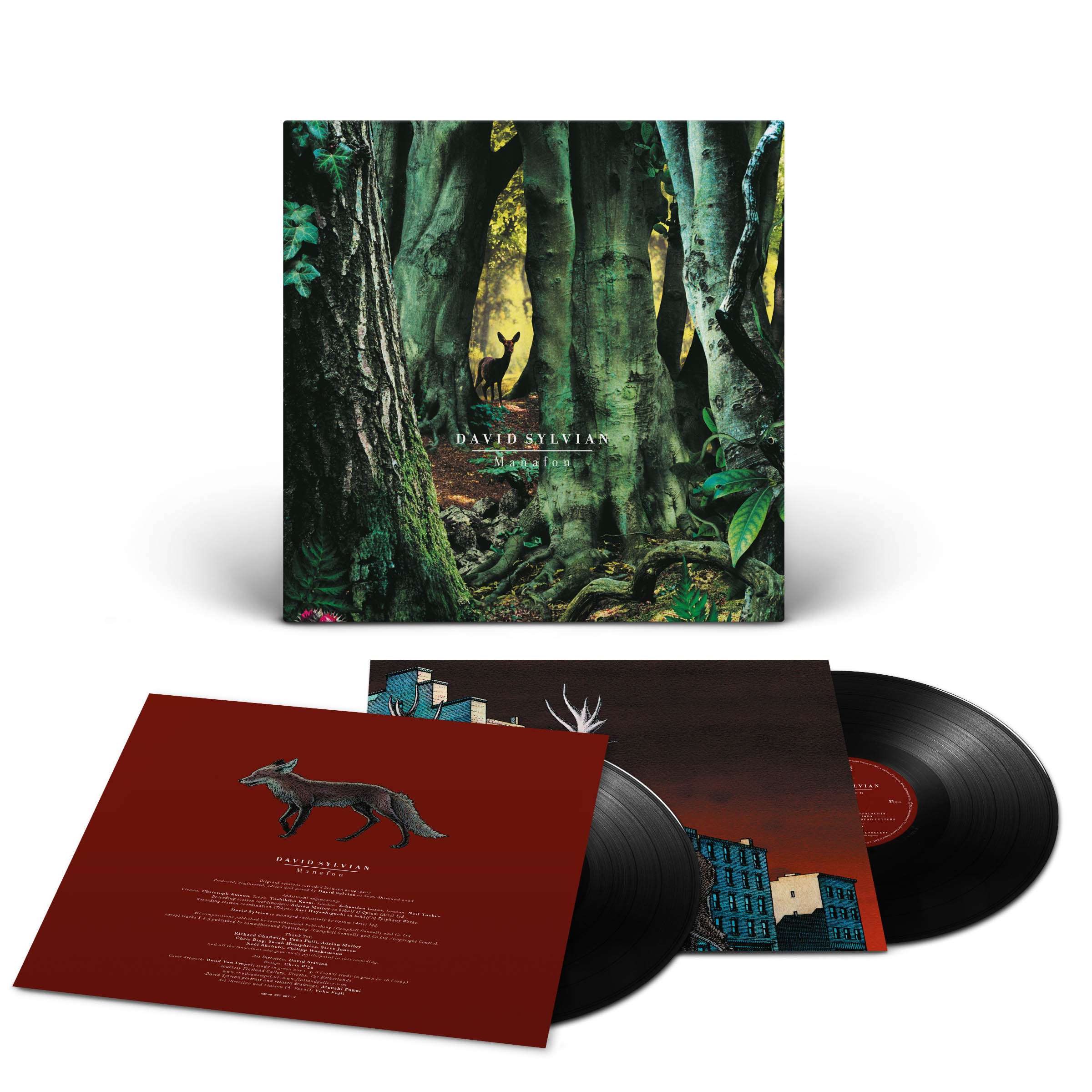
<p>I came across the word in relation to the life and work of R. S. Thomas. It was the location of his first parish (a small village in Wales) and the place where he wrote his first three volumes of poetry. Over time the word became for me a metaphor for the poetic imagination, the creative mind or wellspring, hence the cover art of the cd ‘Manafon’ which depicts an implausible idyll if you will. A place where the intuitive mind taps into the stream of the unconscious. </p>

<p><b>When do you compose, in the morning or at night?</b></p>

<p>Afternoon through to night. </p>

<p><b>You have worked with Stina Nordenstam, do you keep in touch with her?</b></p>

<p>Not often enough.  She’s an enormously talented and remarkable individual. I greatly enjoyed working with her. </p>

<p><b>Any new collaboration with her planned?</b></p>

<p>Not at this time. </p>

<p><b>Can you give an example of how eastern culture has affected you as a human being?</b></p>

<p>I think it affected me in ways that have been so completely absorbed and assimilated that it’s hard for me to comprehend  the degree to which I’ve been influenced by my engagement with eastern culture. I might point to the influence of zen buddhism and, to a lesser extent, shintoism and the guiding roles they’ve played in my personal evolution. The beautiful artifice of popular culture and the mutability of persona. The embrace of one’s masculinity and feminity on equal terms, without conflict. Then there are the friendships which grew overtime with Japanese artists, musicians, composers, all of whom hold an important place in my heart. Musicians and collaborators such as Ryuichi Sakamoto, Toru Takemitsu, Otomo Yoshihide, Toshimaru Nakamura and, more recently, Dai Fujikura. Visual artists such as Shinro Ohtake, Shinya Fujiwara and Atsushi Fukui. I found a compatible aesthetic in many aspects of their work, particularly with Ryuichi, which reflected my own. I found a community of contemporaries in Japan which I failed to find in my own homeland. </p>

<p><b>Would you say that you believe in spirituality and in religion?</b></p>

<p>There’s a strong anti-religious streak in me probably as a result of living in the US where religion attempts to play its part in the moral lives of its people regardless of faith or personal belief. I’m wary of institutions of all kinds but particularly religious ones. Spirituality need have little to do with organised religion per se. To talk about spirituality is increasingly difficulty because the language, which was always somewhat inadequate, has been hijacked and unfortunate associations abound. We do need new terminology to enable us to discuss this issue more effectively. Spirit is essentially what we are, is as much a part of us as our flesh, blood, etc. only more so. We can tap into it in numerous ways. Some might find it best to work with or through organised religion. Others may find it in/through contact with the natural world and still others through their creative lives which are inextricably linked to matters of spirit. The number of diverse paths available that lead to access to, or the blossoming of, one’s own spirit/spirtuality are countless. </p>

<p><b>Are you composing some new material at the moment?</b></p>

<p>I’m working on what might be described as an orchestral version of Manafon. </p>

<p><b>When will you come to Sweden and play?</b></p>

<p>I’d first have to decide that touring is an ongoing option for me and I’ve not yet made that call. </p>]]>
        
    </content>
</entry>
<entry>
    <title>Flux magazine Q+A, October 2010</title>
    <link rel="alternate" type="text/html" href="http://www.davidsylvian.com/texts/interviews/flux_magazine_qa_october_2010.html" />
    <link rel="service.edit" type="application/atom+xml" href="http://www.davidsylvian.com/movabletype/mt-atom.cgi/weblog/blog_id=15/entry_id=1532" title="Flux magazine Q+A, October 2010" />
    <id>tag:www.davidsylvian.com,2011://15.1532</id>
    
    <published>2011-09-23T14:48:43Z</published>
    <updated>2011-09-23T16:10:48Z</updated>
    
    <summary> Your latest compilation Sleepwalkers is an album of collaborations. Do you find working with another person easy? Does not having total control over the evolution of a song bother you? Not if you&apos;ve chosen your collaborators well. With most I do have final say on the direction a piece might ultimately take but there are individuals I&apos;ve been working with for a long time now and with those you tend to know what they&apos;re capable of producing and consequently you&apos;re able to be a little more hands off. Having said that even when working with a long established partner such as Ryuichi, there might be a number of files exchanged, false starts, before we reach common ground. The genesis for a piece such as &apos;World Citizen&apos; might be something as simple as the loop piano which is the basis for the track and which is what I wrote and recorded the vocals to so, again, the structure becomes determined by the architecture of the vocal melody, its duration etc. and Ryuichi then arranges or orchestrates the work around it.  But I have, and continue to, produce my own material so there&apos;s no need to want to control the outcome of every collaborative effort. Collaboration, when it&apos;s right is a challenge and a delight, a real conversation, a generous give and take with, by and large, everyone involved collectively satisfied with the outcome. Many artists seem to be very reluctant to reassess their past work. When it’s done it’s done....</summary>
    <author>
        <name>PhilipMarshall</name>
        
    </author>
            <category term="interviews" />
    
    <content type="html" xml:lang="en" xml:base="http://www.davidsylvian.com/">
        <![CDATA[<p><span class="discogimg"><img src="http://www.davidsylvian.com/images/110923flux.jpg"  /></span></p>

<p><b>Your latest compilation Sleepwalkers is an album of collaborations. Do you find working with another person easy? Does not having total control over the evolution of a song bother you?</b></p>

<p>Not if you've chosen your collaborators well. With most I do have final say on the direction a piece might ultimately take but there are individuals I've been working with for a long time now and with those you tend to know what they're capable of producing and consequently you're able to be a little more hands off. Having said that even when working with a long established partner such as Ryuichi, there might be a number of files exchanged, false starts, before we reach common ground. The genesis for a piece such as 'World Citizen' might be something as simple as the loop piano which is the basis for the track and which is what I wrote and recorded the vocals to so, again, the structure becomes determined by the architecture of the vocal melody, its duration etc. and Ryuichi then arranges or orchestrates the work around it. </p>

<p>But I have, and continue to, produce my own material so there's no need to want to control the outcome of every collaborative effort. Collaboration, when it's right is a challenge and a delight, a real conversation, a generous give and take with, by and large, everyone involved collectively satisfied with the outcome.</p>

<p><b>Many artists seem to be very reluctant to reassess their past work. When it’s done it’s done. Someone like Scott Walker, I’ve read, will record an album and then never listen to it again. You however seem to enjoy remixing and tinkering and returning to your work, the new Sleepwalkers album features a host of remixes and you’ve just announced Manafon is to be radically re-worked with Dai Fujikura. Are you someone who struggles to be satisfied with their work?</b></p>

<p>Actually, once I've personally finished with the work I consider it done, I have no desire to look back, rarely a desire to even perform the work so, in that respect, I share more in common with Scott than maybe apparent. However, where the solo work is concerned it can, very occasionally, be interesting to get someone else's take on the material. This doesn't take extensive involvement on my part other than to select the artists involved, give occasional direction and compile the work. I didn't have plans to rework Manafon, it was Dai that requested if he might have a crack at one or two of the pieces and, as these things have a habit of doing,  it's evolved into something 'other'. Also, the remix work is generally completed while the original is still in my system. Not a vast amount of time lapses between the completion of the original and starting on interpretations. In fact Dai had already made a start on his interpretations before I'd completed the mixing process of the original. As for the collaborative work, if I'm ever afforded the opportunity to remix the work to my liking, and this might only mean very subtle changes from the original, I tend to take it. I can then leave it behind me knowing I gave it my best.</p>

<p><b>The sound of Manafon is very sparse and brittle, your voice is often the only line of melody, with the music being improvised. Is your re-working of this album with Dai an attempt to make the work more accessible? Is the accessibility of music to the listener something that is important to you? Or do you believe that it is the responsibility of the listener to work to understand, if the meaning and sensibility of a song is not presented sugar coated in rich melody, but is hidden deeper? Or is it the responsibility of the singer to satisfy his audience?</b></p>

<p>It's the responsibility of the artist to be true to the work whilst at the same time attempting to make it as accessible, as comprehensible, as one can. Depending on the nature of the work there's sometimes only so much you can do regarding its accessibility. With both Blemish and Manafon I was moving into uncharted waters therefore it wasn't going to be easy for the general audience to accompany me all the way and I was obviously aware of that fact while the work was being created. To have attempted to have made the material anymore accessible would've been to dilute the material's purpose and potency but, I don't believe this marks a disrespect for the listening audience, on the contrary, it's a attempt to offer something of significance. It's relatively easy to repeat the past, it's a far harder, more heartfelt effort, to imagine the future. </p>

<p>Working with Orchestration, fleshing out the melodic content inherent in the vocal lines, tends to make the compositions more accessible, yes. People tend to have a more immediate access to, and appreciation for, the melodies etc. But Dai is a fascinatingly original and protean composer, so whilst the work might ultimately be more accessible, it'll lose none of its complexity, in fact it seems to take on a richer complexity but, to Dai's credit, that doesn't hinder the immediacy of the finished piece. We're working counter to my original intentions for the compositions in a similar way that my vocal contributions on the original worked counter to the intentions of the improvisations.</p>

<p><b>Are you ever worried that an album like Manafon is simply too dense, two impenetrable for your audience. Do you ever think well maybe I’ve gone too far with this one, maybe I should offer something more conventional out of fear of being alienating.</b></p>

<p>I simply do whatever it is I'm driven to at the time of creating a work. My desire is to communicate not alienate but I can't pander to the taste of one particular audience or a particular faction of that audience. This would only end in the failure of both the artistic and commercial merits of the material. </p>

<p>If an audience thinks I've gone too far and refuse to believe in what I'm producing as relevant or worth the effort, I'll not attempt to persuade them otherwise, but I'll continue to give everything of myself to the material regardless until I have to shut down the computer, put the guitar in the case for the last time and start looking at the want ads in the local paper. I've not divorced myself from more accessible work, as I hope the compilation indicates, and there's no reason to believe that later solo works will move increasingly left of field. But I do choose to follow the path in which my instincts lead me. I have to trust in them as there's nothing else I can rely on.</p>

<p><b>Was Dead Bees on a Cake a turning point for you? Your solo work since has been in a completely different vein, it’s almost as if you have put the idea of the pop song to bed and moved on to higher pastures ?</b></p>

<p>Dead Bees was something like a summation of all the solo material that went before it. I knew when I'd finished it I wouldn't be returning to quite the same waters again but I had no idea what that meant at the time in terms of direction. Blemish was the turning point as it gave me an entirely new process with which to work which is something of a gift at this stage in life. It's a mistake to look at the last two solo albums and believe that this is the only kind of material the process is capable of producing as it can potentially produce a wide range of results. Having said that I have returned to more traditional forms of songwriting of late because it felt fresh for me to do so. I won't discard one process for the sake of another. I like having the luxury of choice in that respect. I do love the notion of the pop song, the limitations and challenges it imposes etc. but this is generally the territory of the young or, increasingly, the craftsman, the professional songwriters and producers. Older generations of artists should clear the path, get out of the way and create new territories for themselves, stop attempting to repeat previous career highs. It would, in my opinion, make for a more inventive and varied contribution to the world of song. Then again, Money for All, Wonderful world, to name but two, are pop songs written within  the last five years or so...  there's really very few parameters that define what a pop song can and can't be, after all songs such as Ghosts and Oh Superman were top five material and, in essence, the pop song is a seductive proposition..  no wonder people return to these forms again and again.</p>

<p><b>How did you go about creating the sound heard on Blemish and Manafon? What were your influences? Blemish seems to have been created on a kind of Miles Davis, improvise and see what happens basis, was Derek Bailey in particular and his free improvisation crucial to this? And how was this developed on Manafon?</b></p>

<p>I think it was a combination of my wanting to create something with an urgency to it, that would be rapidly completed and left in its natural state, rather than producing something over deliberated and refined. We'd started work on what was to become 'snow borne sorrow' and the speed of production was reliably slow and, due to my emotional state, I knew this process wasn't going to cut it for me at that moment in time. There was this sense of trauma that needed addressing, that wanted out, so we took six weeks away from that project and I started recording Blemish. I couldn't tell you who or what was crucial in terms of influence outside of the circumstances of my public and private lives. It was part of a personal evolution whose time had come, where things would shift for me in a quietly dramatic way. I knew Derek bore some relation to the material because his was the only music I could listen to leading up to the recording itself. At that time I didn't know how I was going to approach the work or what it might sound like so it was not a conscious absorbing of his influence or anything obvious of that nature. It was simply an intuited connection. Two thirds of the way into recording Blemish I felt I needed a counterpoint to my own approach to guitar improvisation and Derek was the first to come to mind. No one else was considered. </p>

<p>I felt my response to Derek's contribution had worked well enough that the desire arose to attempt work, in a similar fashion, with larger ensembles. To be honest, it was a slightly unnerving proposition to enter a given situation with some of the best in their field with nothing concrete to offer but my assurance, guidance and intuition. Mercifully some, if not all, were familiar enough with Blemish to allow them to give me the benefit of the doubt. All were open minded and generous in their willingness to participate, give of themselves, and in allowing me to do as I wished with the resulting recordings. So, once I had the material in hand, the process of responding to it was remarkably similar to how I'd worked on Blemish, particularly where Derek was concerned, which was a concentrated process of automatic writing and recording executed within a matter of hours. There might've been a 12 month delay between the recording of the music and my response to it but it was, nevertheless, what came to mind in the moment I sat with it for the first time, based on what was suggested melodically and where that led me lyrically although this would also be heavily influenced by the subject matter I knew needed addressing and my state of mind at the time. Essentially, despite the seemingly random nature of the entire enterprise, I had a sense of what it was I was looking for and, over time and through active engagement, worked out how to go about accomplishing my goals.</p>

<p><b>Your complete artistic revolution on Blemish was also twinned with the breakdown of your marriage, as a particularly private person was it difficult to delve so deep into your emotional state and then put those songs up for public consumption? Did you feel overexposed? I would imagine that as an artist, the only way through a situation like that would be self-expression, but was there a part of you which wanted to keep the results of that self-expression private? If so what ultimately persuaded you to put the record out?</b></p>

<p>When I was working on the material I wasn't thinking about the public's reception of it or the degree to which I might be exposing intimate aspects of my life. Despite the themes that drive the material, I found myself excited by what I was hearing at the end of any given day in that it sounded unlike anything I'd produced until that time, unlike anything I heard before. As far as the content goes; I was in an emotionally fragile state due to the breakdown of my marriage, I used the emotions that I experienced at the time to push further into the darker recesses of my own mind to see how far I could go, to see what I'd find there and if and how I could give it voice. They weren't safe places to explore in 'life' but in the work I was able to experience them without any negative repercussions for myself and those around me. To make it clear, while the emotions that surrounded the breakdown of the marriage were obviously the impetus for the work, I went a lot further internally with those when writing. It remains a portrait of someone in crisis but I didn't feel I was exposing anyone but myself in the work. Did I feel overexposed? Yes, most certainly, but if I worried about such things or tried to second guess myself in that regard I could do what it is I do. I'd undercut any potential value the songs might have. </p>

<p><b>There was recently a release of some of the work you wrote and recorded with your former wife Ingrid Chavez, Little Girls With 99 Lives. It’s a very beautiful and fragile collection of work. Would you say there is a different energy, a more productive creative atmosphere when you are recording music with a person you are in love with? Can that be captured in the music, the connection between two people, in the same way that Blemish captures the heartbreak when that connection breaks down?</b></p>

<p>I think that depends on the individuals in question. Ingrid and I didn't happen to have a productive working relationship. There's multiple reasons for this and I'd prefer Ingrid explain rather than I, but it comes down to a chemistry of sorts that might work in some aspects of a shared life but not in others. Ingrid's really creative under pressure, all-cards-on-the-table, all-hands-on-deck, kind of scenarios which was the inverse of what we had going on. </p>

<p><b>You are pretty rare in the music sphere as man who has both chart success to his name and some albums of extremely creative, innovative, experimental music. What was the hardest to write and record, a song like Ghosts or a song like Emily Dickinson? And do you feel that you could not have written and recorded one without the other?</b></p>

<p>There has to be a starting point and in a way Ghosts represents that for me. There's a chronology, an irregular linearity if that's an acceptable oxymoron, in that one idea gives birth to another. There are instances of exception where a kind of personal 'evolutionary' leap takes place but otherwise you're able to find signs of the present indicated in the immediate past. Neither Ghosts nor Emily Dickinson were problematic for me as composer. The most marked difference between the two is that with Ghosts the concept for the electronic arrangement came after the act of composition whereas with Emily Dickinson I'd put all the pieces of the puzzle together prior to writing the lyric and melody. </p>

<p><b>I have mentioned your influences while creating your more recent work, but who were your first influences when you were a young man setting off with Japan in the early 80’s? I would imagine they were not the same people who were influencing some of the other leading lights of the pop scene then. For example you seemed to have been very influenced by later Dirk Bogarde, thinking of Nightporter of course and you recorded a piece called Steel Cathedrals which is also the name of a poem Dirk wrote. He seemed to have been particularly inspirational to people who were grouped under the New Romantics label, people like Bryan Ferry and Morrissey also name him as a key figure. Would you agree? And do you look back particularly fondly on your 80’s image/persona?!</b></p>

<p>Least favorite question so far. I have a poor memory for such things to be honest. For example, I wouldn't have remembered an interest in Bogarde were it not for the fact that his biographer got in touch recently to ask about the obvious references. I was quite taken aback that Steel Cathedrals was a poem by Bogarde, I simply wouldn't have known that to be the case, but I must've read it and it lodged itself in the back of my mind. However, I clearly remember being in a car on the road from Yokohama to Tokyo speeding past all of these factories that were beautifully lit up at night, looking quite otherworldly, like some colonial outpost on a distant planet, and thinking to myself 'these resemble something like steel cathedrals, inspiring a similar kind of devotion perhaps amongst those that work within their walls'..(until the economic recession hit Japan, individuals tended to devote their entire lives to the one company or corporation) and, as I happened to be working on both the music and the film at the time, the title stayed with me. How does that work? I read the book in '78, the composition was made in '85. No matter how I personally feel about the source of the title I have to believe there's a debt to be acknowledged there. I become the unreliable narrator of my own story. </p>

<p>Some things I remember clearly, the genesis of an idea, the details of the recording process etc. but there's whole periods of my life, particularly my mid teens to early twenties, where I have few memories or fragments to pull from. This might be the result of not looking back, taking stock etc. When that period of my life ended, I think it's fair to say, it was no longer of interest to me. It was shed like a skin and I've honestly not dwelt on it since. </p>

<p>But I did enjoy Bogarde's mid to late period. It was good to be reminded of this. His best films don't seem to have appeared on DVD even though they were by celebrated directors such as Renais and Fassbinder. I think my take on them would be very different now but it was an interesting and brave career move for Bogarde to choose to make. The word I would choose to use is 'necessity' as that's how I saw it from my own experience. It was a matter of self respect of allowing the inner self room to breathe. Not to have done so would've resulted in self destructive tendencies. When it's a matter of necessity is it right to call the move a 'brave' or 'courageous' one? Probably not. </p>

<p>Do I look back fondly? I don't look back. </p>

<p><b>Do you see a similarity between Bogarde’s career and yours? From popular success to art house recognition? I suppose the comparison again could also be made with Scott Walker. Did you always intend it to be that way?</b></p>

<p>It was an evolution, growing up in public etc. By the time I'd come to my senses I'd realised what it was I didn't want and what it was I was going to have to sacrifice to do differently. I daresay there aren't that many of us that have taken this particular divergent path away from the spotlight to the periphery but I'm certain that in most cases it's a matter of personal necessity as described above. Survival wouldn't be too strong a word to use, certainly in someone like Scott's case. The spotlight was ill-fitting. </p>

<p><b>You have described yourself as “crippling shy” when you were young and still I imagine, would never describe yourself as an extrovert. Shyness has its downsides obviously, but it allows you to accept solitude more easily and it’s only really with some element of solitude that you can learn about yourself, read, discover music, become to whatever degree a “thinker” rather than someone who does not break through the surface levels of their own mind. Has shyness in a way saved you? Had you been extroverted and outgoing in South London in your youth, do you think you would have been eaten up by the city, married early, with kids, chained to a suburban routine? Do you think shyness protected you from that and allowed you to develop more individually, to think more individually? Or do you see it instead as something that has restricted you?</b></p>

<p>I wouldn't wish shyness upon anyone. In society at large as well as family, it's a crippling form of impotency. You're acquainted with an internal suffering very early on in life and I guess this promotes the building of a healthy (or unhealthy) inner life that sustains you. Aside from the matter of shyness I was an uncompromising child when it came to the things I valued, and loved, really quite stubborn and sure of myself, and there was nothing about life as it was lived around me that I wished to emulate so I don't believe the script would've been radically re-written had things started out differently. Without the shyness attached I might've benefited from a greater clarity of purpose, who's to say? As it was there was a need to conceal as well as to express. A need for physical isolation too, an escape of sorts, or maybe 'control' is a better word. I don't think it's possible to produce good work from such a defensive position but first I needed to build the walls of my fortress before I was able to think more clearly. That would've been around the time the band came to an end. Money gave me the luxury of choosing how to exist in the world, to afford isolation, this is what I'd worked towards, to be in control as to how much I could take onboard at any one time and the freedom (though not without consequences) to step away when overwhelmed and it was awfully easy for me to be overwhelmed by social situations.</p>

<p>"My nature is orderly and observant and scrupulous  and deeply introverted, so life wherever I attempt it turns out to be claustral" Joyce Carol Oates</p>

<p><b> I have read a few interviews with you and the subject has turned to the Internet and how you often communicate with people only via the net, you’ve mentioned people that you have collaborated with musically who you have never actually sat in a room with. You have said “I'm fascinated by that: How organic a piece of music can sound and feel even though these musicians were never in the same space at the same time.” Is this still the case? Music lends itself to collective experience, how does that separation lend itself to creativity? And do you think that relying on the Internet for communication could allow us to be lulled into a comfort zone that we could become a little too used to?</b></p>

<p>On the latter issue, sure, it can be a potential problem especially for young people who believe they've a social life whereas, in reality, they're completely isolated and protected from revealing anything of themselves they might find unpalatable (or, again, the reverse.. let the inner demons out in a safe environment with no consequences of any significance). But most adults have lives that bring them into full engagement with the world at large and the personas/personalities with which to carry them through. The same can't be said for younger people. School and college gets them out into the world but the ego isn't fully formed, the sense of self, personal identity, isn't fixed, is still very malleable and the social pressures intense, unforgiving, often openly hostile. But maybe you're suggesting that the isolation could lead to an artistic comfort zone? Which seems to have worked in the reverse in my case as, whatever else I'm doing, I'm not making myself comfortable.</p>

<p>Regarding communications in general, sometimes the only options available are a phone call or an email. Working long distance with people in different time zones results in email being the preferred means of communication. It's all about the music in the end not the social interaction. You speak, you engage, through the body of work. That is so much more intimate than many people I've spoken with seem to imagine. </p>

<p>Regarding the making of music; if you've engaged with other musicians in a live setting frequently enough then, as in all things, you've gained enough experience to know how things work. There's no right or wrong way of going about this. There is your intuition, the nature of the work at hand, and the limitations and the opportunities you're presented with. You make the most of these. If you're 18, working a day job and by night making music on a sampler with an HD recorder you know what your limitations are and you pull out all the stops to make something that satisfies you and that has every chance of being as relevant, as groundbreaking, as that multi platinum band recording in a room together in the Bahamas. If working in partnership, you choose your collaborators with careful precision and half the work is done for you whether you're recording together live or sending files across the internet. When I send a composition to Jan Bang or Arve Henriksen in Norway I know, without doubt, they will give 100% of themselves to producing what is asked of them and I hope they feel they can rely on me to do the same. Most musicians will give you multiple takes with which to work so the element of creative choice remains. Editing, placement, treatments and processing are a creative part of the work too. You might love a particular phrase as played but if you wish to change one note in the scale, you're able to do this. I've recorded live in the studio with Arve and we've exchanged files on numerous occasions. I have no preference where the results are concerned only the nature of the work dictates which route has to be taken. Sometimes, file exchanges aren't going to cut it, you have to be present, you have to give clear indication and guidance to a group of musicians who'll be recording together because there's something imperative about the nature, the essence of the work, that demands it. If working on more traditional material it's imperative that certain elements be recorded in person. If you're working with drums and bass for example, getting the feel of the track for something pre-composed, you're not going to leave that to chance and interpretation, that's going to be a booked session. </p>

<p>Let's also not forget that, for the past three decades or so, in the world of popular music, there's rarely been a group of musicians in a room together performing live. More often, with the possible exception of the basic rhythm track, the music was created one on one; producer, artist, and guest musician, the results of which were often radically edited and refined. Nothing wrong with this approach either in my opinion. </p>

<p>The short answer would be anything goes. It simply depends on what your needs, priorities and limitations are for any given project. In the traditional sense music lends itself to communal activity but there's plenty of material of that nature out there. Music also lends itself to the solitary, the introspective, the cerebral and the emotional. You might choose to watch a movie in the presence of others in a cinema because that was once considered a communal experience and many still prefer that experience over a solitary one but increasingly we seem to choose to watch a movie in a home setting, in HD, or on our laptops. We forego the communal aspect for something more intimate. Really depends on the material, the individual etc. There are many variations at work here, many choices we're capable of making both as creators and consumers. As far as musicians go I would say that this development has been revolutionary, liberating. It's made possible that which would otherwise be impossible. If you know what you're doing, it won't necessarily be clear to the listening public how the work was created. The question shouldn't even arise. They should just be engaged, immersed in the results.</p>

<p><b>Are you starting to feel the kind of resolution that comes with (or so I hear!) getting older. Perhaps a better question would be is did you ever feel mentally young? Did you ever feel at ease as a young man? Have you settled more into your skin with age?</b></p>

<p>Bergman said " I myself never felt young, only immature." There's something in that sentence that resonates. I didn't feel at ease when young, but then I don't feel at ease now for entirely different reasons. I am surer of myself. I know what I've got to offer. Wisdom is hard won.</p>

<p><b>Spirituality and religion are obviously extremely important to you, if you follow the path of your music you have written about Buddhism, Christianity you have considered the work of  R.S Thomas on Manafon, is this a continuing journey? And what would you say is the bigger force in your life, music or spirituality, or are the two intertwined?</b></p>

<p>Being, with a capital 'B' is the biggest force in life. Learning how to simply Be in the world. Music is born out of that experience, spirituality underlines or defines it either by its presence or absence. </p>

<p><b>Does anything inspire you about the state of music in the 21st century?</b></p>

<p>Yes, plenty. So many individuals producing good work. Some of it is rightly acknowledged and highly appreciated, from arcade fire to radiohead, but most artists that I enjoy listening to repeatedly couldn't get arrested. </p>

<p><b>Will you ever perform live again and did you ever feel comfortable with the experience when you did?</b></p>

<p>I have felt comfortable onstage, yes. Live performance has never been a priority of mine but that doesn't mean it hasn't been valuable, education on many levels, and rewarding. I don't attend live shows myself, or at least, very rarely. If I'm in a city and a friend is performing I'll likely see them. If there's a comparatively rare opportunity to see a performer whom I've long admired who's either semi retired or no longer tours that often I might take it in but more often than not, I won't. Most of my greatest musical experiences, outside of creating it, tend to be in relation to recorded work. But there have been notable exceptions. </p>

<p><b>And finally, I've read that someone like Bob Dylan will only ever record music after 2am in the morning. As a writer and musician what is more convivial to creativity? A summer’s day or a dark winter’s night?</b></p>

<p>A bright winter's day. </p>]]>
        
    </content>
</entry>
<entry>
    <title>A Necessary Evil</title>
    <link rel="alternate" type="text/html" href="http://www.davidsylvian.com/texts/interviews/a_necessary_evil.html" />
    <link rel="service.edit" type="application/atom+xml" href="http://www.davidsylvian.com/movabletype/mt-atom.cgi/weblog/blog_id=15/entry_id=1531" title="A Necessary Evil" />
    <id>tag:www.davidsylvian.com,2011://15.1531</id>
    
    <published>2011-09-23T14:35:27Z</published>
    <updated>2011-09-23T14:46:28Z</updated>
    
    <summary> Zero Music Magazine (Sweden) Journalist: Hans-Olof Svensson On the subject of Sleepwalkers: Sleepwalkers - Selecting Tracks How did you decide which tracks should go on the album? What were the selection criteria? What tracks were considered for inclusion but then left off, and why? ‘Linoleum’, for instance, is a personal favourite of mine. The process of selection comes down to personal preference and availability of the material. For example, I’d have liked to have reworked the theme for the manga series ‘Monster’ entitled ‘For the love of life’ and Blonde Redhead’s ‘The messenger’ but for various reasons this wasn’t possible. What kind of dynamic were you trying to create in assembling these particular tracks in this particular order? Can a piece of music in some way be altered simply by taking it out of one context and placing it in another context and another dynamic, and if so, can you give specific examples of this? Firstly there’s the issue of continuity. When compositions come together that weren’t intended to be heard in the same context you might find some interesting contrasts and a certain amount of friction. Of course, listening to a particular piece in a fresh context can change our response to, or perspective on it. Take a piece such as ‘Transit’ which, when heard in the context of Christian’s original ‘Venice’ cd has a sonic continuity with the pieces which surround it but in the context of ‘Sleepwalkers’ the introduction to Christian’s sonic palette can be quite...</summary>
    <author>
        <name>PhilipMarshall</name>
        
    </author>
            <category term="interviews" />
    
    <content type="html" xml:lang="en" xml:base="http://www.davidsylvian.com/">
        <![CDATA[<p><i> Zero Music Magazine (Sweden)<br />
Journalist: Hans-Olof Svensson</i></p>

<p><span class="discogimg"><img src="http://www.davidsylvian.com/images/110923ane.jpg"  /></span></p>

<p><i>On the subject of Sleepwalkers:</i></p>

<h2>Sleepwalkers - Selecting Tracks</h2>

<p><b>How did you decide which tracks should go on the album? What were the selection criteria? What tracks were considered for inclusion but then left off, and why? ‘Linoleum’, for instance, is a personal favourite of mine.</b></p>

<p>The process of selection comes down to personal preference and availability of the material. For example, I’d have liked to have reworked the theme for the manga series ‘Monster’ entitled ‘For the love of life’ and Blonde Redhead’s ‘The messenger’ but for various reasons this wasn’t possible. </p>

<p><b>What kind of dynamic were you trying to create in assembling these particular tracks in this particular order? Can a piece of music in some way be altered simply by taking it out of one context and placing it in another context and another dynamic, and if so, can you give specific examples of this?</b></p>

<p>Firstly there’s the issue of continuity. When compositions come together that weren’t intended to be heard in the same context you might find some interesting contrasts and a certain amount of friction. Of course, listening to a particular piece in a fresh context can change our response to, or perspective on it. Take a piece such as ‘Transit’ which, when heard in the context of Christian’s original ‘Venice’ cd has a sonic continuity with the pieces which surround it but in the context of ‘Sleepwalkers’ the introduction to Christian’s sonic palette can be quite startling which, to my mind, is a desirable result. I enjoy hearing dramatic contrasts in a body of work as much as I enjoy something that was designed with a more conceptual uniformity.  </p>

<h2>Sleepwalkers - Specific Tracks</h2>

<p><b>Are you the kind of artist who feels comfortable explaining what individual tracks are ‘about’, or do you feel that an explanation from the artist somehow diminishes the music and/or lyrics by limiting the interpretations open to the listener? Personally, for instance, I’m curious as to who the ‘fucking sleepwalkers’ of the title track might be.</b></p>

<p>I feel no need to pin down the meaning behind the lyrics of a particular song. </p>

<p>We’re all blind-eyed, dull-witted sleepwalkers for the most part. It takes an enormous effort of will to change this involving a recognition of the condition and the prescribed antidote to be administered. You can take a simple test as outlined by Ouspenksy, illuminated by Gurdjieff, but what is after all a basic component of Buddhist practice. Sit and practice conscious awareness. I am here, now. I am awake in this moment now, awake to the stimuli around me, not lost in thought, reflection, projections into the future, waking dream states etc. Once you’ve awoken to this awareness, recognised not just the sense of clarity but that it’s an altogether different state of mind than one predominantly finds oneself, see how long it is before you once again come back to that state and acknowledge it as in ‘I am here now’. For some it’s a matter of seconds perhaps depending on the distractions around you at that moment in time. For others minutes, hours, even months might pass before we wake to the present moment again. Whatever the distance travelled that is how long you were asleep and so on throughout your lifetime. </p>

<p>That’s one possible interpretation of the line you’re curious about. There are others that are equally valid related to cultural consumerism and our addiction to the things that keep us asleep as opposed to challenging us to wake up in the 21st century. Culture as comfort food. </p>

<p><b>This interview is aimed at Swedish and Scandinavian readers, who might be particularly interested in your collaboration with Stina Nordenstam on “Wonderful World”. What can you tell us about that collaboration: how it came about, the creative process, personal chemistry between the individuals involved, anecdotes from the recording session…? Basically whatever occurs to you in summing the collaboration up.</b></p>

<p>While writing the lyric to ‘Wonderful World’ it occurred to me that the chorus should be sung by a female voice. I knew Stina’s work well and felt, rightly or wrongly, that I could hear overt references to my work in her own. Regardless, I felt she was the right person for this particular track so we made contact and eventually flew over to Stockholm to work with her. One of the first things she told me as she sat in the hotel lobby with a beat up guitar missing about three strings, was that my music had been an influence of some kind in her life, I’ve no idea to what degree, and so I immediately felt we were intuitively on common ground. Steve, Stina and myself spent a wonderful evening together walking Stockholm, talking about everything under the sun. The next day we recorded and rapidly covered all the ground necessary. Stina had, overnight, composed a couple of verses for another piece we were working on and we had time to lay that track down also. She knows her instrument exceptionally well, how to get the most out of that beautiful, seemingly fragile, voice. It might sound odd to say it but the experience of meeting and working with Stina was something akin to reconnecting with a long absented but loved sibling. </p>

<p><b>By the way, obviously ‘Ballad of a Deadman’ is very firmly planted in a certain musical tradition, but more specifically it reminds me of ‘Work Song’ by Oscar Brown Jr and Nat Adderley. Can you hear that similarity too, and if so, was it intentional? </b></p>

<p>I didn’t compose the music for ‘Deadman’, my brother did. You’d have to ask him about specific musical references although I’d imagine the impetus was simultaneously something more contemporary and more rootsy than either of the gentlemen mentioned above. From my standpoint, I simply responded to what I heard. The lyric is very loosely based on Joan Didion’s book on the settling of California, ‘where I’m from’. I’d lived there for a number of years and knew the landscape of which she wrote. Love Didion, love California, this was a tribute to both. </p>

<h2>Musical Development</h2>

<p><b>This record charts the last decade. What have been the most creatively rewarding moments during this period for you? Can you name times and places (and people) where something clicked and things fell into place?</b></p>

<p>Outside of the material on this album I was primarily focused on recording my solo work. I reached a turning point working on both the title track for ‘Blemish’ and ‘The only daughter’. I worked on these pieces alone but both tracks really opened things up for me regarding the process in which they were made and the depth of the emotions experienced/expressed. On a later occasion I remember everything coming into focus at a session in Vienna with Keith Rowe, Michael Moser and Werner Dafeldecker, that justified a particular approach I had chosen to take and which confirmed the direction of my work for the next few years. There were many moments on the Nine Horses project where things really came together beautifully, notably writing the tracks ‘Wonderful world’ and ‘Atom and Cell’ with my brother. At the end of the Blemish tour in ’04,  I wrote the lyric for ‘A history of holes’ in a hotel in Köln prior to a meeting with Burnt Friedman which marked the beginning of our creative involvement together. Later that evening I attended the Erstwhile festival where I would meet many of my future collaborators (Otomo, Nakamura, Sachiko, Rowe, Müller ) for the first time.  Thinking specifically of material related to this album, Ryuchi asked me to contribute to a commission he’d received but had yet to find a direction for. He sent me some musical references and occasional sketches but nothing clicked with me until I heard the piano loop for what was to become ‘world citizen’. I played the loop on a four hour drive to NY. By the time I arrived everything was in place. I’m still quite fond of that lyric. Whilst Steve was working on Slope I’d been assigned to find suitable vocalists for each track he’d send my way. Late one evening, after a day’s work on Manafon, I found an audio file waiting for me from Steve. As I played the file back I found I had a melody for the piece and quickly scribbled down some lyrics, recorded the results into a portable digital recorder and mailed the results back to him with notes as to who should sing it before sinking deeply into sleep. That piece had a very simple sense of rightness about it. Steve eventually asked me to record a version of my own which is how two versions of ‘Playground Martyrs’ ended up on his album. </p>

<p>The majority of the tracks on ‘Sleepwalkers’ were written in isolation. The only exception is ‘Wonderful world’ where Steve and I were working in the same location.</p>

<p><b>For a long period you appeared to be moving away from song-based ‘pop’ structures to a looser form of experimentation, but you have also said that recently you have been returning to songs. Where along that line are you right now?</b></p>

<p>I suspect I’ll always be moving back and forth between the two, occasionally occupying space in the middle ground. </p>

<p><b>Surface / depth is a dichotomy that springs to mind here. Are song-based structures somehow by their very nature more superficial, or can the restrictions of working within a defined frame or format produce depth in other ways? Is this a balance you try to address at all as you work, or do you simply let the chips fall where they may?</b></p>

<p>I believe depth and superficiality are not determined or defined by form but rather by intention. Working within a given form or limiting oneself by other means often produces the more interesting results. Even the material I was working with on Manafon presented me with a serious set of limitations. I’d also given myself certain rules to adhere to such as not to edit the recordings themselves, as in cutting into the body of an improvisation, which meant there were plenty of creative obstacles to be overcome. </p>

<p>The seemingly simplest of pop/folk/rock songs can hit a common chord in the hearts of many, can run as deep as other form of music. One thinks of Nick Drake, Dylan, Lennon, Caetano Veloso, John Martyn, Bob Marley, Marvin Gaye, Jeff Buckely, Lou Reed + VU, Joni Mitchell, to name but a few. </p>

<h2>Thoughts on the Interview Process</h2>

<p><b>How do you feel about the interview process? Can it produce worthwhile results, is it a necessary evil or just a chore?</b></p>

<p>Depending on frame of mind, all of the above. On the completion of new work it can be instructive to be in the position of trying to explain one’s reasoning as clear logic rarely comes into the creative process as such. It’s like being present at the scene of a fire, a baby thrown from the third floor window of a blazing building which, without knowing quite how or why, you mange to catch. The reporter asks, ‘so what were you thinking when you saw the baby falling..’.  There’s no satisfying answer to that question, just an ineloquent recounting of fact. You can’t speak of impulse and intuition, you tend to talk around it with metaphors, analogies. You intuit something of which the mind has only the slightest inkling.</p>

<p><b>Your personality seems to be somewhat introverted or introspective. (I feel uncomfortable making this kind of assumption or statement about someone I have never talked to, and whom I am only writing to now, but I suppose it’s a necessary concession to the limitations of the interview process.) Would you agree that this trait makes for better personal insight, but a reluctance to actually share it, i.e. you’ve got something to say but don’t really feel like saying it, whereas many musicians and ‘celebrities’ are the opposite? (I do realise that I’m making the classic error of asking a ‘yes/no’ question here…)</b></p>

<p>Well, I’d agree that introspection leads to a greater clarity of insight which is something we’re all the better for. To be somewhat introspective does tend to make one wish for a more or less private existence but, as a writer, simultaneous with that desire, is another that intends to share work which one feels might be of interest or beneficial in some capacity or another. I suppose that comes down to a simple inclination to be of service, to live a life in which one gives back. In other words one’s own personal needs don’t take precedence, or at least a compromise has to be reached in life and not elsewhere. For the writing to have any kind of value, certainly in my case, entails a good deal of self-revelation in that I don’t stand in its way but follow where it leads. The ‘confessional’ isn’t where the intrinsic value lies, as in it isn’t merely confessional for the voyeuristically inclined but the work has to be rooted in some kind of exposure of an aspect of the human condition. The best material has something of a specific or personal nature that can be applied generally. Without the general application the material is virtually worthless.</p>

<p><b>You’ve said you never look back. Can you shut retrospection off at will, or does the fact of compiling a record like this, and then being interviewed about it, force you to look back anyway? If so, can it be useful or is it merely mental ‘debris’ that you need to ‘detox’ yourself of afterwards?</b></p>

<p>I don’t have any personal desire or need to look back. I carry within me what I need to move forward.  “.. I never reread what I’ve written. I’m far too afraid to feel ashamed of what I’ve done.” Jorge Luis Borges</p>

<p>We inevitably fall short of our self-made goals and so, as Beckett might say, we go on.</p>

<p><b>Do you sometimes find yourself being amused by pretentious journalists tying themselves in knots to interpret your music and sometimes trying too hard? Have there been any interpretations that you recall as being particularly wide of the mark? (Without naming and shaming anyone, of course.)</b></p>

<p>I’ve heard one or two things that’s surprised me over the years, not from journalists but from listeners who were projecting their own neuroses onto me or the material but it doesn’t really matter unless the projection is seen as justifying something of a harmful nature, self or otherwise. I’m happy that listeners find themselves reflected in the compositions, that’s as it should be. Reviews are something other. Whether positive or negative they’re nearly always off the mark regarding where the value or the faults of the material lie. </p>

<h2>Literature and Current Influences</h2>

<p><b>As I write this I hear on the radio that the Swedish Academy has announced this year’s winner of the Nobel Prize in Literature, Mario Vargas Llosa. How do you feel about their decision?</b></p>

<p>Ambivalent.</p>

<p><b>What books are you currently reading, and what are you getting from them? Assuming one can make sense of a learning process while it’s still going on. Perhaps I should rephrase that question and ask about books from your recent past. Which works of art, cinema or music have you been influenced (for want of a better word) by recently? (I do know that this is one of the most trite and unoriginal questions one can ask, but there is always the hope that the response will be interesting nonetheless.)</b></p>

<p>To answer the above; I don’t believe inspiration comes from books, films and the like. I tend to feel that one knows when something needs to be addressed internally, intuitively, but one doesn’t always know what that might be or how to approach it, but by a timely crossing of paths with a particular book or film or whatever, the vessel filled to brimming is uncorked and the work begins to flow. </p>

<h2>Present and Future</h2>

<p><b>Assuming this record is a way of putting your recent work behind you, in what direction(s) will you be moving in the near future?</b></p>

<p>I wouldn’t classify this project as a kind of fork in the road. It’s simply material that I’ve produced outside of the solo albums that I wanted to gather up and put under one roof for easy access. It’s been on the cards for sometime. I’m still putting together an alternate take on Manafon which incorporates new compositions as well as new orchestral arrangements of some of the pieces from that project. That should be wrapped up by the end of the month after which I’ll have a number of alternate projects on the table from which to choose. I’m not entirely certain at this juncture which will claim my attention first. I do tend to enjoy working on multiple projects simultaneously so that’ll likely be the approach I’ll take. In terms of direction, the projects all potentially point in differing directions from the electronic to the orchestral to more traditional forms of song writing. A couple of the projects demand long-term commitment regarding the amount of work and time involved but I don’t feel I’m in any kind of rush, it’s more an issue of wanting to be certain I’m not covering ground that I’ve been over once before. </p>]]>
        
    </content>
</entry>
<entry>
    <title>There’s Trouble and Complexity Beneath the Surface of Beauty</title>
    <link rel="alternate" type="text/html" href="http://www.davidsylvian.com/texts/interviews/theres_trouble_and_complexity_beneath_the_surface_of_beauty.html" />
    <link rel="service.edit" type="application/atom+xml" href="http://www.davidsylvian.com/movabletype/mt-atom.cgi/weblog/blog_id=15/entry_id=1530" title="There’s Trouble and Complexity Beneath the Surface of Beauty" />
    <id>tag:www.davidsylvian.com,2011://15.1530</id>
    
    <published>2011-09-23T14:25:55Z</published>
    <updated>2011-09-23T14:34:39Z</updated>
    
    <summary>Question for Intoxicate magazine on the subject of Sleepwalkers. From where did the idea of this compilation came from and why now? After leaving Virgin Records and starting my own label, samadhisound, I found more offers for collaborative work started coming in. Virgin used to limit my involvement with other labels and musicians or put unreasonable demands upon the artist/labels in question so maybe when that situation changed it opened me up to a greater number of offers? But I also relished my new found freedom and began to initiate communications with a variety of musicians to see where they might lead. Many of my collaborators have worked with me in one form or another outside of the examples collected here. Takagi –san provided visuals for my 2003/04 tour for ‘Blemish’. Burnt Friedman had previously provided me with remixes of my work. My brother Steve, and good friend Ryuichi have been at my side for decades now and so on. I decided to release the compilation now because there was a body of work building up which extended beyond the confines of one album. I wanted to present the best of them under one umbrella, that of my name, so that people would now how and where to seek these pieces out. What was the criteria of the selection of the tunes? It was a matter of how much I related to the material itself. How proud I was of the result. How do you place these collaborative works in...</summary>
    <author>
        <name>PhilipMarshall</name>
        
    </author>
            <category term="interviews" />
    
    <content type="html" xml:lang="en" xml:base="http://www.davidsylvian.com/">
        <![CDATA[<p><i>Question for Intoxicate magazine on the subject of <a href="http://www.davidsylvian.com/sleepwalkers">Sleepwalkers</a>.</i></p>

<p><span class="discogimg"><img src="http://www.davidsylvian.com/images/110923-ds-is.jpg"  /></span></p>

<p><b>From where did the idea of this compilation came from and why now?</b></p>

<p>After leaving Virgin Records  and starting my own label, samadhisound,  I found more offers for collaborative work started coming in. Virgin used to limit my involvement with other labels and musicians or put unreasonable demands upon the artist/labels in question so maybe when that situation changed  it opened me up to a greater number of offers? But I also relished my new found freedom and began to initiate communications with a variety of musicians to see where they might lead.  Many of my collaborators have worked with me in one form or another outside of the examples  collected here.  Takagi –san provided visuals for my 2003/04 tour for ‘Blemish’. Burnt Friedman had previously provided me with remixes of my work. My brother Steve, and good friend Ryuichi have been at my side for decades now and so on. </p>

<p>I decided to release the compilation now because there was a body of work building up which extended beyond the confines of one album. I wanted to present  the best of them under one umbrella, that of my name, so that people would now how and where to seek these pieces out. </p>

<p><b>What was the criteria of the selection of the tunes?</b></p>

<p>It was a matter of how much I related to the material itself. How proud I was of the result. </p>

<p><b>How do you place these collaborative works in your creative career? I assume you would not consider it merely a as a side-project.In another words, in what way is it important that you continuously keep collaborating with others. How does it affect your own music.</b></p>

<p>Collaborations happen for all kinds of reasons. I personally take on a collaborative project if it fits one of the following criteria:</p>

<p>a)	takes me to a place musically I’ve not been before or would not think of going outside of this particular  invitation to collaborate. </p>

<p>b)	I have an interest in the work in general  of the a artist in question so the first collaboration is a means of testing the water in the hope that more will follow. </p>

<p>c)	The collaborator is a long-term friend whom I trust completely and will therefore not question the notion of the collaboration itself only the motivation or the direction etc.</p>

<p>d)	A debt of gratitude for services rendered to me on a previous occasion.</p>

<p><b>Since these collaborative works are not always under your total control, I assume that it may occur sometimes that the outcome of the work would be different than what you have expected and may not match with your aesthetics. does that kind of thing happen sometimes and if it does, how would you react to that?</b></p>

<p>It happens sometimes but quite rarely. With anyone I have a longstanding relationship with it’s not an issue. When it does happens it tends to be an offer that comes to me out of the blue and over which I extend  little, or no personal control (with many collaborations there’s  often a courtesy given of allowing your collaborator to hear the final results for comment prior to completion).  </p>

<p>In such cases I react with mild disappointment but it’s the collaborator’s aesthetic that guides the work and that ultimately has to be satisfied.  (this is a little more like being employed as a vocalist rather than a full bloodied collaborator. I’ve avoided this kind of work for almost a decade now as it basically doesn’t interest me on any level).  </p>

<p><b>Although the songs that you have selected here seems quite varied in terms of sounds and musical background of the participating musicians, the album seems to have a unity as a whole. Was it difficult for you to put these varied pieces and put them in a sequence? did you have any particular idea or image of how you put them together?</b></p>

<p>It wasn’t a difficult album to sequence. I had more than enough material to play with and those pieces that were sonically a little difficult to place, I remixed. </p>

<p><b>According to the question above, why did you decide to name this album Sleepwalkers.</b></p>

<p>Because that’s how I felt regarding the tracks in question, that they were sleepers, tracks many people didn’t know existed. My orphans, lost, used and abused.  It was time to take them in and care for them. Let them get to know one another. </p>

<p>It’s also the title of my favourite track on the cd itself. </p>

<p><b>Can you describe about the visual image of the album jacket? whos work is it and, why did you choose it.</b></p>

<p>The work is by the young woman featured in the images. Her name is <a href="http://kristamas.net" target="new">Kristamas Klousch</a> and these are a selection of some of her many self portraits which is what she specializes in. Choosing a cover image is an intuitive process for the most part. I see something and it resonates with me. For some reason she epitomized the title of the album for me. A gorgeous, beautiful, exotic, erotic, orphaned  creature  who was playfully reinventing herself with each image but which also reflected a familiarity with the darker aspects  of life, of being.. There’s trouble and complexity beneath the surface of beauty. </p>

<p><b>In these ten years in which these songs are recorded what was the biggest event that affected your music. And how did it change you.</b></p>

<p>I’d have to say it was the end of my marriage that had the most profound affect on me. It changed me in every way imaginable but not all for the worst. No, not at all. </p>

<p><b>Do you have anyone in particular in mind that you wish to collaborate in the future?</b></p>

<p>I’m currently producing new work with Dai Fujikura who’s enormously talented and a great pleasure to work with. I’d also like to write some more with Martin Brandlmayr with whom I wrote the title track. </p>

<p>Thank you</p>

<p>David<br />
</p>]]>
        
    </content>
</entry>
<entry>
    <title>David Sylvian&apos;s &quot;Implausible Beauty 2012&quot; tour is now on sale to the General Public</title>
    <link rel="alternate" type="text/html" href="http://www.davidsylvian.com/news/david_sylvians_implausible_beauty_2012_is_now_on_sale_to_the_general_public.html" />
    <link rel="service.edit" type="application/atom+xml" href="http://www.davidsylvian.com/movabletype/mt-atom.cgi/weblog/blog_id=15/entry_id=1527" title="David Sylvian's &quot;Implausible Beauty 2012&quot; tour is now on sale to the General Public" />
    <id>tag:www.davidsylvian.com,2011://15.1527</id>
    
    <published>2011-09-23T10:30:00Z</published>
    <updated>2011-09-23T10:29:01Z</updated>
    
    <summary>Some may have christened the project &apos;The Implausible Tour&apos;, as David has become increasingly reclusive and private in most aspects of his life and the notion of live performance seemingly anathema to him. However, recently, he has found a line-up of musicians with whom he&apos;s genuinely excited to perform live and to whom he&apos;s most grateful for their commitment. More information on the musicians involved in this series of performances along with a personal message from David will follow in due course at his various websites and other online outlets. tour.davidsylvian.com...</summary>
    <author>
        <name>PhilipMarshall</name>
        
    </author>
            <category term="news" />
    
    <content type="html" xml:lang="en" xml:base="http://www.davidsylvian.com/">
        <![CDATA[<p>Some may have christened the project 'The Implausible Tour', as David has become increasingly reclusive and private in most aspects of his life and the notion of live performance seemingly anathema to him. However, recently, he has found a line-up of musicians with whom he's genuinely excited to perform live and to whom he's most grateful for their commitment.</p>

<p>More information on the musicians involved in this series of performances along with a personal message from David will follow in due course at his various websites and other online outlets.</p>

<p><a href="http://tour.davidsylvian.com">tour.davidsylvian.com</a></p>]]>
        
    </content>
</entry>
<entry>
    <title>Implausible Beauty 2012 - pre-order starts today</title>
    <link rel="alternate" type="text/html" href="http://www.davidsylvian.com/news/implausible_beauty_2012_preorder_starts_today.html" />
    <link rel="service.edit" type="application/atom+xml" href="http://www.davidsylvian.com/movabletype/mt-atom.cgi/weblog/blog_id=15/entry_id=1525" title="Implausible Beauty 2012 - pre-order starts today" />
    <id>tag:www.davidsylvian.com,2011://15.1525</id>
    
    <published>2011-09-21T10:30:43Z</published>
    <updated>2011-09-21T10:32:49Z</updated>
    
    <summary>David Sylvian&apos;s &quot;Implausible Beauty 2012&quot; tour will start in Padova, Italy on the 1st March 2012. All of the dates are listed at tour.davidsylvian.com, and include exclusive pre-order links for fans for 48 Hours from today (where available)....</summary>
    <author>
        <name>PhilipMarshall</name>
        
    </author>
            <category term="news" />
    
    <content type="html" xml:lang="en" xml:base="http://www.davidsylvian.com/">
        <![CDATA[<p>David Sylvian's "Implausible Beauty 2012" tour will start in Padova, Italy on the 1st March 2012. All of the dates are listed at <a href="http://tour.davidsylvian.com">tour.davidsylvian.com</a>, and include exclusive pre-order links for fans for 48 Hours from today (where available).</p>]]>
        
    </content>
</entry>

</feed>